If you’re a landlord, property manager, or Build-to-Rent operator in Manchester, 2026 is shaping up to be the most significant year for electrical safety compliance in a generation. A wave of new regulations, updated standards, and a surge in demand are all converging at the same time — and being unprepared could cost you thousands.
Here’s everything you need to know about what’s changing, why it matters, and how to stay ahead.
The Five-Year EICR Renewal Wave Has Arrived
When the Electrical Safety Standards in the Private Rented Sector (England) Regulations 2020 came into force, landlords were required to have a valid Electrical Installation Condition Report (EICR) for all new tenancies from July 2020, and for all existing tenancies by April 2021.
Those five-year certificates are now expiring — and they’re all expiring at once.
Industry data suggests that the proportion of rental properties needing EICR renewal is set to peak in 2026, with a significant number of certificates expiring within a concentrated window. For Manchester — one of the UK’s largest and fastest-growing rental markets — this creates enormous pressure on electrician availability and pricing.
What This Means for You
- Don’t wait until the last minute. Electrician availability will tighten significantly throughout 2026. Booking early ensures you avoid delays and potential non-compliance.
- Check your expiry dates now. Dig out your current EICR and note the expiry. If it falls in 2026, start planning your renewal immediately.
- Budget for potential remedial works. An EICR isn’t just a tick-box exercise. If Code 1 (danger present) or Code 2 (potentially dangerous) observations are found, you’re legally required to have them resolved by a qualified electrician.
Social Housing Now Requires EICRs Too
One of the biggest changes came into force on 1 November 2025. The Electrical Safety Standards have been formally extended to the social rented sector for the first time.
This means housing associations, council housing providers, and registered social landlords must now meet the same EICR requirements that private landlords have followed since 2020. New social tenancies needed compliance from November 2025, while existing tenancies have a transitional period running until 1 November 2026.
For the electrical industry, this is significant. Thousands of previously unregulated social housing properties across Greater Manchester now need inspecting — all competing for the same pool of qualified electricians already handling the private sector renewal wave.
The Additional Requirement
Social landlords also face an extra obligation: in-service inspection and testing of electrical equipment provided under the tenancy, on at least a five-year cycle. This goes beyond the fixed wiring inspection that private landlords require and adds another layer of compliance.
BS 7671 Amendment 4: The New Wiring Standard
Amendment 4 to BS 7671:2018 (the 18th Edition of the IET Wiring Regulations) was signed off on 15 January 2026 and is set for publication on 15 April 2026. After a six-month transition period, all electrical installations must be designed and inspected to the updated standard from 15 October 2026.
Key Changes Include:
- Battery Energy Storage Systems: A brand new chapter covering stationary secondary batteries, reflecting the rapid growth in home battery storage linked to solar panels and renewable energy.
- Power over Ethernet (PoE): New requirements for PoE installations, which are increasingly common in smart buildings and commercial properties.
- Functional Earthing for ICT Systems: Updated guidance on earthing and bonding for information and communication technology equipment.
- Medical Locations: A major revision of Section 710, affecting healthcare facilities and care homes.
- Updated Test Results Schedules: New documentation requirements for supplementary protective equipotential bonding conductors.
For landlords and property managers, the key takeaway is this: EICRs carried out from October 2026 onwards will be assessed against the updated standard. If your property has older installations, particularly around consumer units, earthing arrangements, or RCD protection, you may see new observations appearing that weren’t flagged on previous inspections.
Awaab’s Law Phase 2: Electrical Hazards Under the Spotlight
Awaab’s Law — named after two-year-old Awaab Ishak, who tragically died from mould exposure in social housing in nearby Rochdale — came into force on 27 October 2025. Phase 1 focused on damp, mould, and emergency hazards, requiring social landlords to investigate within 24 hours and begin remediation within strict timescales.
Phase 2, expected to come into effect during 2026, will expand the scope to include electrical hazards, fire safety, structural risks, excess cold and heat, falls, and hygiene hazards.
For social landlords in Greater Manchester, this carries particular weight. Emergency electrical hazards already require investigation and action within 24 hours under Phase 1 provisions. When Phase 2 brings broader electrical safety formally into scope, the compliance bar will rise even further.
Why This Matters Locally
The Rochdale tragedy that inspired this legislation happened right here in Greater Manchester. Local authorities across the region are taking enforcement seriously. Awaab’s Law puts teeth behind the requirement for landlords to act swiftly when electrical hazards are identified during EICRs or reported by tenants.
The Renters’ Rights Act: Higher Fines, Tighter Enforcement
The Renters’ Rights Act received Royal Assent on 27 October 2025, with the main provisions taking effect from 1 May 2026. This is the most significant piece of rental legislation in over a decade, and it has direct implications for EICR compliance.
Key Changes for Electrical Safety:
- National Landlord Database: Landlords will need to register and upload valid safety certificates including their EICR. Failure to register will restrict the ability to serve statutory possession notices — essentially making it impossible to legally manage your tenancy without compliance.
- Higher Penalties: The maximum civil penalty for EICR non-compliance rises from £30,000 to £40,000.
- Mandatory Council Enforcement: Local authorities will have a mandatory duty (not just discretionary power) to issue remedial notices where EICRs identify safety failings. This means councils must act, not just may act.
- Expanded Tenant Remedies: Tenants can pursue Rent Repayment Orders for up to two years’ rent (increased from 12 months) where landlords fail to comply with safety standards.
The message is clear: the government is moving from encouraging compliance to actively enforcing it, and the financial consequences of non-compliance are growing.
Manchester’s Booming Rental Market Amplifies the Pressure
Manchester isn’t just any rental market. It’s one of the fastest-growing in the UK, with average rents continuing to rise and gross rental yields that consistently rank among the nation’s highest.
The city’s Build-to-Rent sector alone has thousands of operational units with a significant development pipeline. Major regeneration projects are bringing thousands more homes online, and the city’s population continues to grow rapidly.
More properties means more EICRs. More EICRs means more demand for qualified electricians. And with the renewal wave, social housing extension, and new regulations all hitting simultaneously, the pressure on Manchester’s electrical compliance industry is going to be immense.
Local councils are already demonstrating their willingness to enforce. Across Greater Manchester, councils have been handing out significant fines to non-compliant landlords, with some facing penalties running into the tens of thousands.
How to Prepare: Your 2026 Compliance Checklist
With so many changes converging, here’s a practical checklist to make sure you’re covered:
- Audit your EICR expiry dates. Check every property in your portfolio and identify which certificates expire in 2026. Prioritise the earliest ones.
- Book inspections early. Don’t wait for the rush. Contact your electrician or compliance partner now to schedule renewals well ahead of expiry.
- Budget for remedial works. Set aside funds for any Code 1 or Code 2 defects that may be identified. Under the new enforcement regime, you can’t afford to delay repairs.
- Understand the new standards. BS 7671 Amendment 4 takes effect in October 2026. Ask your electrician how this might affect your properties, particularly if they have older installations.
- Register for the National Landlord Database. When the portal opens in May 2026, make sure your valid EICR is ready to upload.
- Review your social housing portfolio. If you manage social housing, ensure all existing tenancies have a valid EICR before the November 2026 deadline.
- Stay informed on Awaab’s Law Phase 2. Understand the new response timescales for electrical hazards and make sure your maintenance processes can meet them.
- Work with a trusted compliance partner. The complexity of these overlapping regulations means having a knowledgeable, reliable electrical compliance company is more important than ever.
How Manchester Compliance Can Help
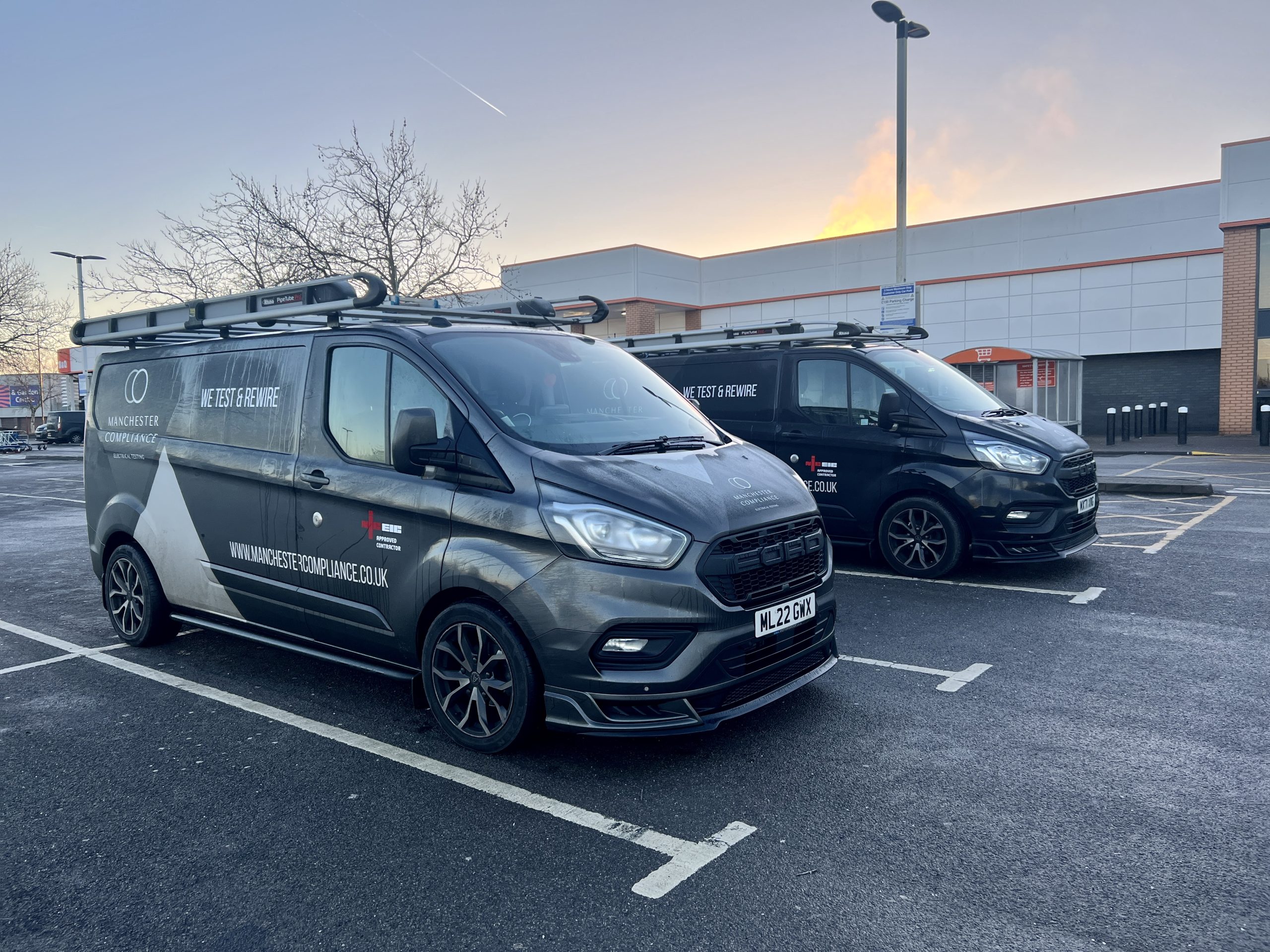
At Manchester Compliance Ltd, we specialise in EICR inspections and electrical compliance for landlords, property managers, and Build-to-Rent operators across Greater Manchester and the North West.
Our team of qualified electricians understands the full regulatory landscape — from the current five-year renewal wave to the upcoming changes in BS 7671 Amendment 4 and the Renters’ Rights Act. We provide fast, efficient inspections with clear reporting and can handle remedial works where required.
Whether you manage a single buy-to-let or a portfolio of hundreds of apartments, we can help you stay compliant, avoid costly penalties, and protect your tenants.
Don’t Wait for the Rush — Book Your EICR Today
Get ahead of the 2026 compliance wave. Contact our team for a free quote.
Published February 2026 by Manchester Compliance Ltd. This article is for informational purposes and does not constitute legal advice. Always consult the relevant regulations and seek professional guidance for your specific situation.