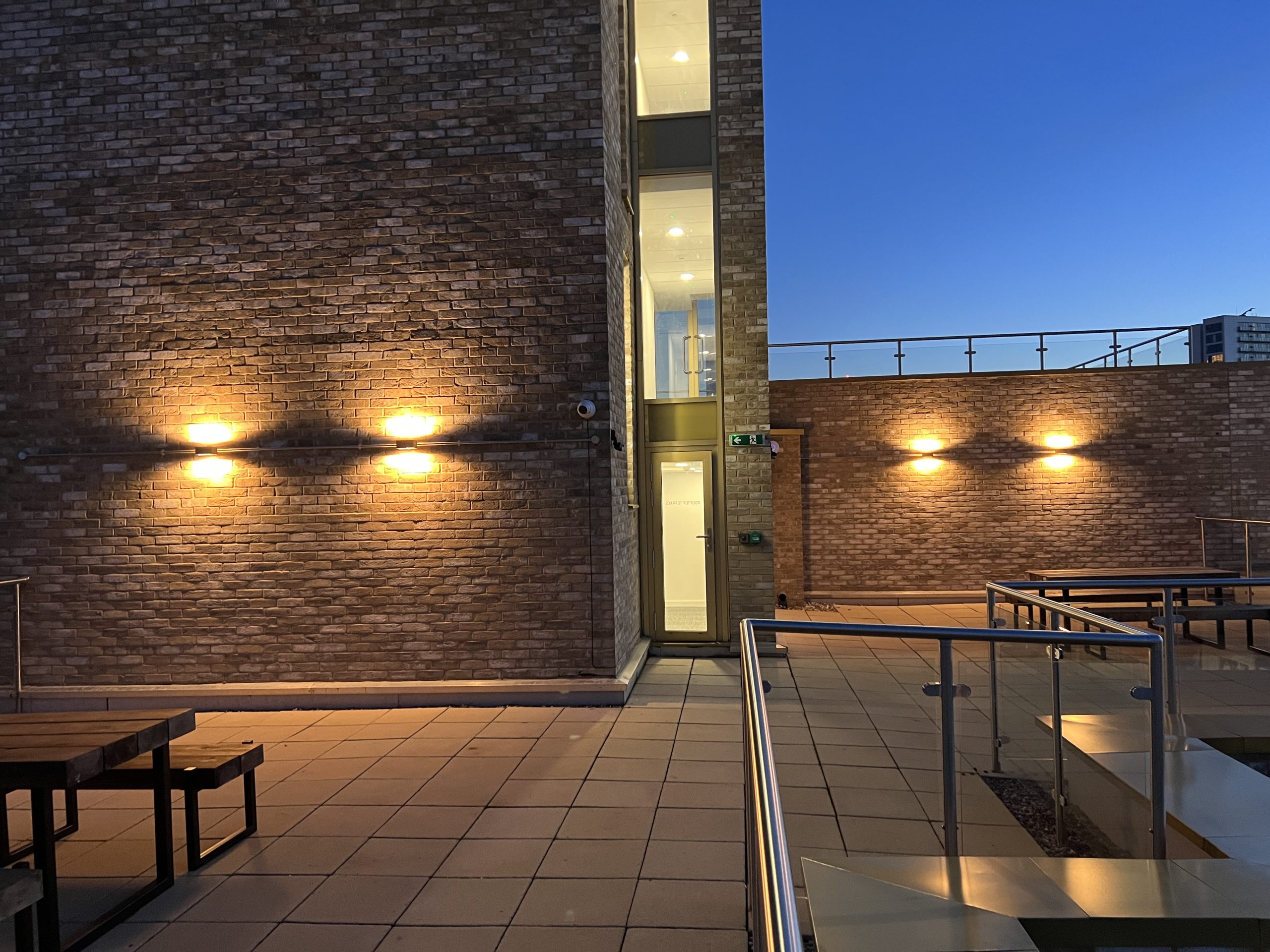
Emergency lighting is one of those things most people never think about — until there’s a power cut or a fire and it’s the only thing guiding people to safety. For landlords, building managers and business owners across Manchester, getting your emergency lighting tested and properly reported isn’t optional. It’s a legal requirement under fire safety law.
Here’s what you need to know about emergency lighting testing, how often it needs doing, and what should be in your report.
Why Emergency Lighting Matters
Emergency lighting activates when the normal power supply fails. Its job is simple — illuminate escape routes, exit signs and open areas so people can get out safely. Without it, a power failure during a fire or emergency could leave people in complete darkness, unable to find exits.
Under the Regulatory Reform (Fire Safety) Order 2005, the responsible person for a building (typically the landlord, employer or building manager) must ensure emergency lighting is installed, maintained and tested. The standard that governs this is BS 5266, which sets out the design, installation and testing requirements.
How Often Should Emergency Lighting Be Tested?
BS 5266 and BS EN 50172 set out a clear testing schedule that every building must follow:
Monthly Functional Test (Flick Test)
Every month, each emergency light fitting needs a brief functional test. This involves simulating a power failure to check that every luminaire switches on correctly. It’s a quick check — not a full discharge — designed to catch obvious faults like dead bulbs, failed batteries or fittings that have been blocked by furniture or shelving.
Annual Full Duration Test
Once a year, every emergency light must be tested for its full rated duration — typically 3 hours for most commercial and residential premises. This proves the batteries can sustain the lights long enough for a full evacuation. This test should be carried out by a competent electrician and done outside normal working hours.
Daily Checks (Central Battery Systems Only)
If your building uses a central battery system rather than individual battery packs in each fitting, a daily visual check of the indicator panel is needed to confirm the system is charging and in standby mode.
What Should an Emergency Lighting Report Include?
A proper emergency lighting test report isn’t just a tick sheet. It should contain enough detail to prove your system is compliant and your building is safe. Here’s what to look for:
- System details — layout plans, number of luminaires, types of fittings, battery types and locations
- Test results — pass/fail status for each fitting, with the date and duration of the test
- Defects found — any faults, failed batteries, damaged fittings or obstructed luminaires
- Remedial actions — what was done to fix any issues, with dates
- Competent person details — who carried out the test, their qualifications and company
- Compliance statement — confirmation that the system meets BS 5266 requirements
These records must be kept on site in a fire safety logbook and be available for inspection by the fire service or local authority at any time.
Who Needs Emergency Lighting?
If your building falls into any of these categories, you almost certainly need emergency lighting in place:
- HMOs and blocks of flats — communal hallways, stairwells and exit routes
- Commercial premises — offices, warehouses, retail units, restaurants
- Build to Rent developments — common areas, car parks, corridors
- Hotels and guest houses — anywhere people sleep
- Schools, healthcare and public buildings
Single-family homes are generally exempt, but communal areas in any multi-occupancy building are treated as non-domestic and must comply.
What Happens if You Don’t Comply?
Non-compliance with emergency lighting regulations can result in enforcement notices, significant fines and even prosecution under fire safety law. In the worst case — if someone is injured or killed because emergency lighting failed — the responsible person could face criminal charges.
Your insurance may also be invalidated if your emergency lighting hasn’t been properly tested and documented.
How Manchester Compliance Can Help
We carry out emergency lighting testing and reporting across Manchester, Wigan, Liverpool and the wider North West. Our engineers test every fitting, document everything to BS 5266 standards, and provide you with a clear, plain English report — plus we’ll flag any remedial work needed and can carry it out the same day in most cases.
Whether you manage a single HMO or a portfolio of Build to Rent properties, we make compliance straightforward.
Need Emergency Lighting Testing?
We test, report and fix — all to BS 5266 standards. Fast turnaround across Manchester, Wigan and Liverpool.
Published February 2026 by Manchester Compliance Ltd.